Crawl space help • South Sound, WA
Rodent Damage Cleanup
The visible damage is only part of the problem. Understand how rodent activity, entry points and affected materials shape a restoration plan.
Plan Your Next Step →Understand your options ↓Inspections and repairs are performed by independent local providers, not CrawlRescue.
Recognize possible damage
What an assessment may need to separate.
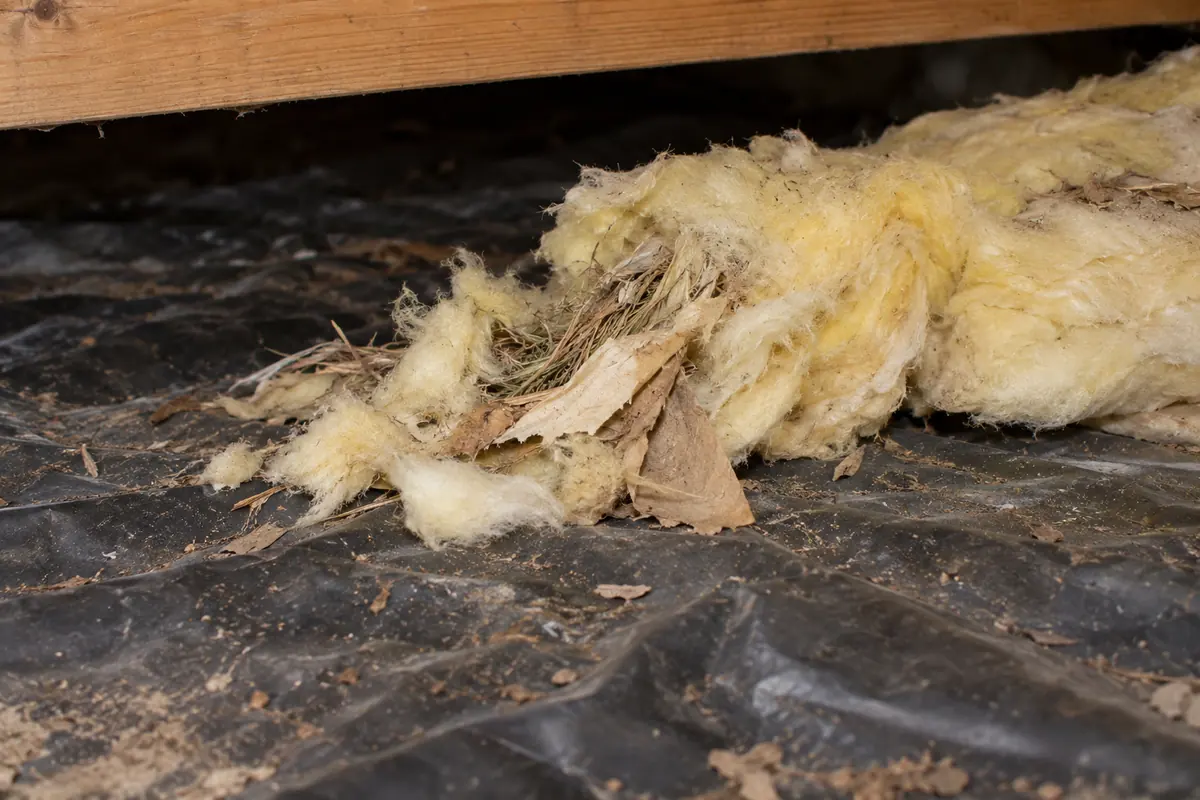
Droppings, nesting materials and chewed insulation can indicate rodent activity. They do not by themselves establish whether activity is current, how far contamination extends or what must be replaced.
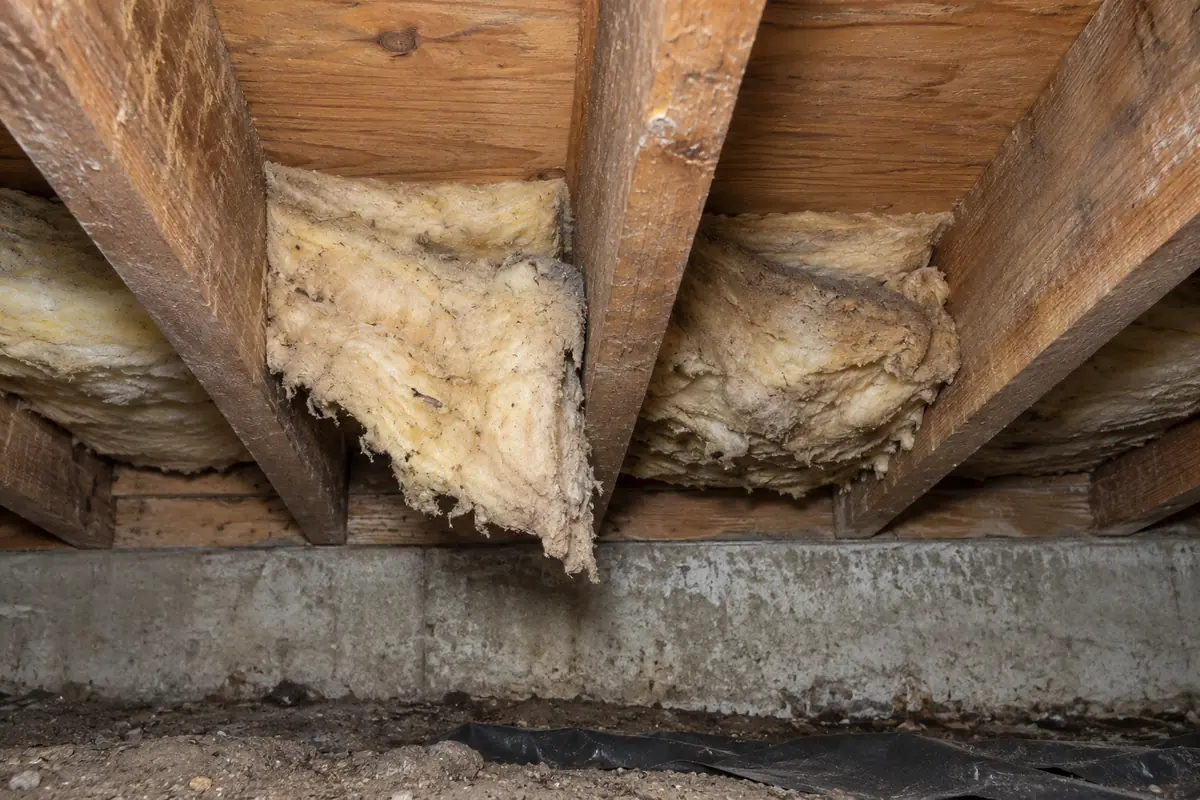
- Damaged insulation
- Torn or contaminated material may need assessment and appropriate removal. Understand crawl space insulation decisions.
- Nests, droppings and affected debris
- Handling should follow the condition and contamination risk. Do not sweep, vacuum or disturb suspect rodent waste while preparing for an inspection.
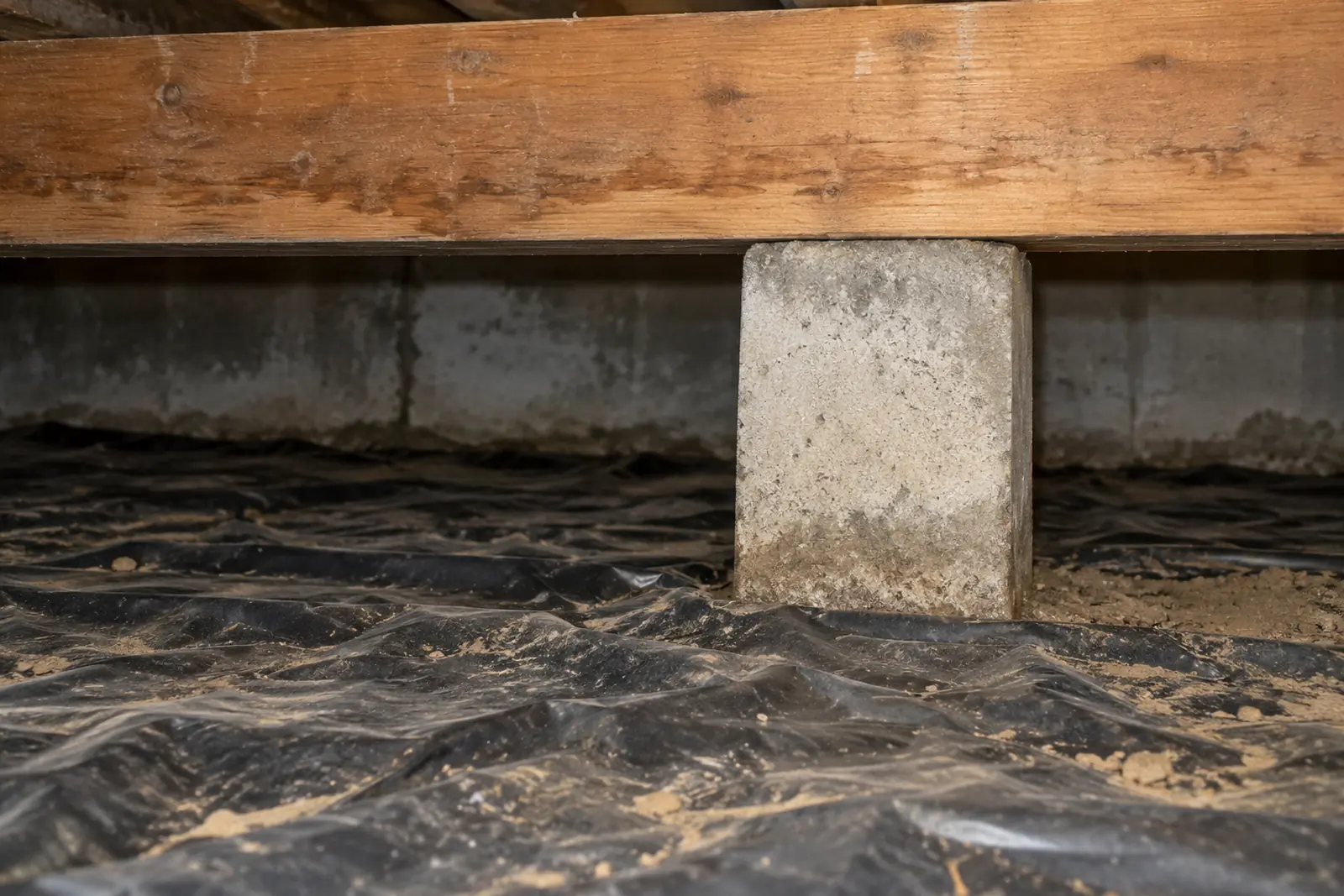
- Disturbed ground cover
- Damaged plastic may require repair or replacement after source issues and contamination are assessed. A fresh liner should not conceal unresolved waste or damage.
- Utility or structural findings
- Chewed wiring, damaged ducts, leaks or affected framing may require qualified trades in addition to pest control and material restoration.
Two related scopes
Cleanup alone does not end an active rodent problem.
Removing damaged insulation and debris does not close entry points or establish that rodents are no longer active. Pest assessment, control and exclusion may be needed alongside crawl space restoration.
Ask who investigates activity, who addresses entry and who removes or replaces affected materials. These responsibilities may belong to different independent providers.
CrawlRescue provides homeowner information; it does not perform pest control. Explore the rodent symptom guide.
Prepare safely
Describe the concern without disturbing it.
Share existing photos or inspection findings, when noises or other signs started and any known pest work. Do not enter an unsafe space or handle suspect contaminated materials to gather evidence. This page does not provide a DIY contamination-cleanup procedure.
Before choosing work
An inspection can put the scope in context.
Describe the signs you have noticed and share any existing photos or report. Ask which findings are confirmed, which causes remain uncertain and whether separate trades need to be involved. Scope depends on access and the provider’s assessment.
What a crawl space inspection may help clarify →
Start with the signs. Leave the repair decision for the inspection.
Plan Your Next Step →Explore the next step
Related crawl space resources
South Sound homeowners
A clearer next step for your home.
CrawlRescue is focused on homeowners in Olympia, Lacey, Tumwater and the broader South Sound. Note the signs you have noticed and keep any existing inspection findings handy.
A home’s access, drainage, utilities and existing crawl space design matter more than a generic repair package. A site visit is needed to evaluate your property.
Any inspection or repair is performed by an independent local service provider, not CrawlRescue. How CrawlRescue plans to work with local providers is explained in How It Works. Online inspection requests are not open yet.
Sources & further reading
Educational guidance. A site visit is needed to identify the cause and appropriate repair for your home.