Olympia, Washington • South Sound
Crawl Space Help for Olympia Homeowners
Water under your Olympia home, hanging insulation or a persistent musty smell? Connect the signs to source-first repair options and the questions an inspection should answer.
Plan Your Next Step →An Olympia homeowner starting point
Your home’s condition comes before a service name.
For Olympia homeowners, this guide brings water, ground-cover, insulation and rodent concerns into one repair decision framework. Start with what you can observe, then distinguish source correction from the materials that may need restoration. A property assessment remains necessary before choosing the work.
A water problem noticed after rain, deteriorated ground cover or insulation damage may each need a different assessment. The timing and visible condition matter; the city name alone does not establish a cause. Access, utilities, previous work and the crawl space design also affect the next step.
Recognize the sign
What have you noticed underneath?
- Water that appears or returns
- Note whether it follows rain or remains during dry weather. Explore standing water and possible sources before looking at water and drainage options.
- Insulation hanging from joists
- Support, disturbance, water or rodent damage may be involved. Understand falling insulation and the questions behind insulation removal or replacement.
- Droppings, nesting or chewed material
- The signs do not establish current activity or the full damage scope. Read the rodent symptom guide before considering rodent damage restoration.
- Mustiness, dampness or wet materials
- Odor is not a mold diagnosis. Investigate musty crawl space concerns without assuming one product solves every moisture condition.
From water to questions
An inspection should clarify the source.
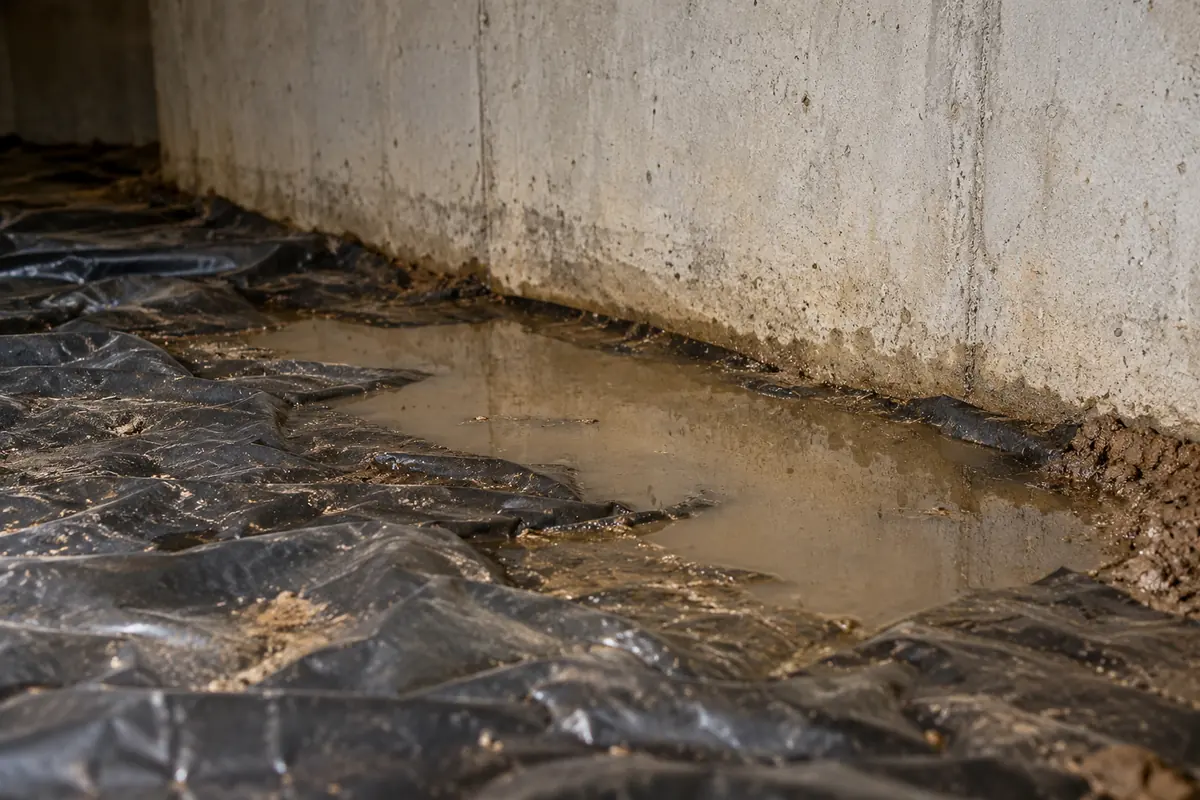
Runoff, groundwater, plumbing and existing drainage can all be relevant possibilities. A new liner does not repair a leaking pipe; a dehumidifier does not collect standing water.
From an accessible outdoor area, note any water pooling near the home or gutter overflow. Use existing inspection photos and reports. Do not enter water near wiring, disturb contamination or enter an unsafe space to collect evidence.
Olympia repair decisions
Compare the proposed work with the condition it addresses.
Standing water versus ground moisture
Water collecting beneath the home deserves a source investigation before a liner or sealed-space proposal. Ask whether the evidence points to a leak, exterior runoff or another source, and how the proposed drainage work addresses it. A vapor barrier limits moisture from exposed soil; it does not stop an active water source.
Compare a vapor barrier with encapsulation once the water questions are understood.
Replacement versus a wider moisture strategy
Damaged insulation does not automatically establish that the whole crawl space needs encapsulation. Ask whether support failure, wetting or disturbance explains the damage, which materials can remain and what prevents the same failure after replacement. A broader moisture-control proposal should explain drainage, drying and insulation together.
Cleanup versus stopping activity
Removing nesting or contaminated material and addressing rodent entry are different tasks. Ask who evaluates current activity and exclusion, and how that work relates to crawl-space cleanup. Fresh materials can be damaged again if the active cause remains unresolved.
One scope versus several qualified trades
A crawl-space report may also identify plumbing, electrical or structural concerns. Ask which work the proposed provider can perform, which findings need another qualified specialist and what is excluded from the quote. Compare written scopes by the condition they address rather than by a package name alone.
Before the visit
Build a useful record for your Olympia home.
Keep the evidence you have
Relevant report pages, existing photos, dates and any earlier drainage, insulation or pest work help explain the concern.
Separate facts from assumptions
“Water appears after rain” is an observation. “The home needs a sump” is a conclusion that needs supporting assessment.
Ask about repair sequence
What stops the source? Which materials need work? What is excluded, and how will performance be checked?
Local reference
Useful information beyond the crawl space.
Olympia’s public stormwater program describes runoff management and drainage-system work. Use the City’s resources when you need public stormwater context; they do not establish why water is under a particular house. A crawl space assessment should distinguish the property’s source and repair scope from broader municipal projects.
City of Olympia: Stormwater Management Program
City resources provide public context, not a diagnosis of your home or a CrawlRescue endorsement.
Before an inspection
Turn the observations into an assessment brief.
Include recurring water, affected materials and earlier repairs so the source and restoration questions can be considered together.
Any inspection or repair is performed by an independent local service provider, not CrawlRescue. How CrawlRescue works.
Start with your home
A clearer next step in Olympia.
Connect the signs to a source-first repair discussion.
Plan Your Next Step →