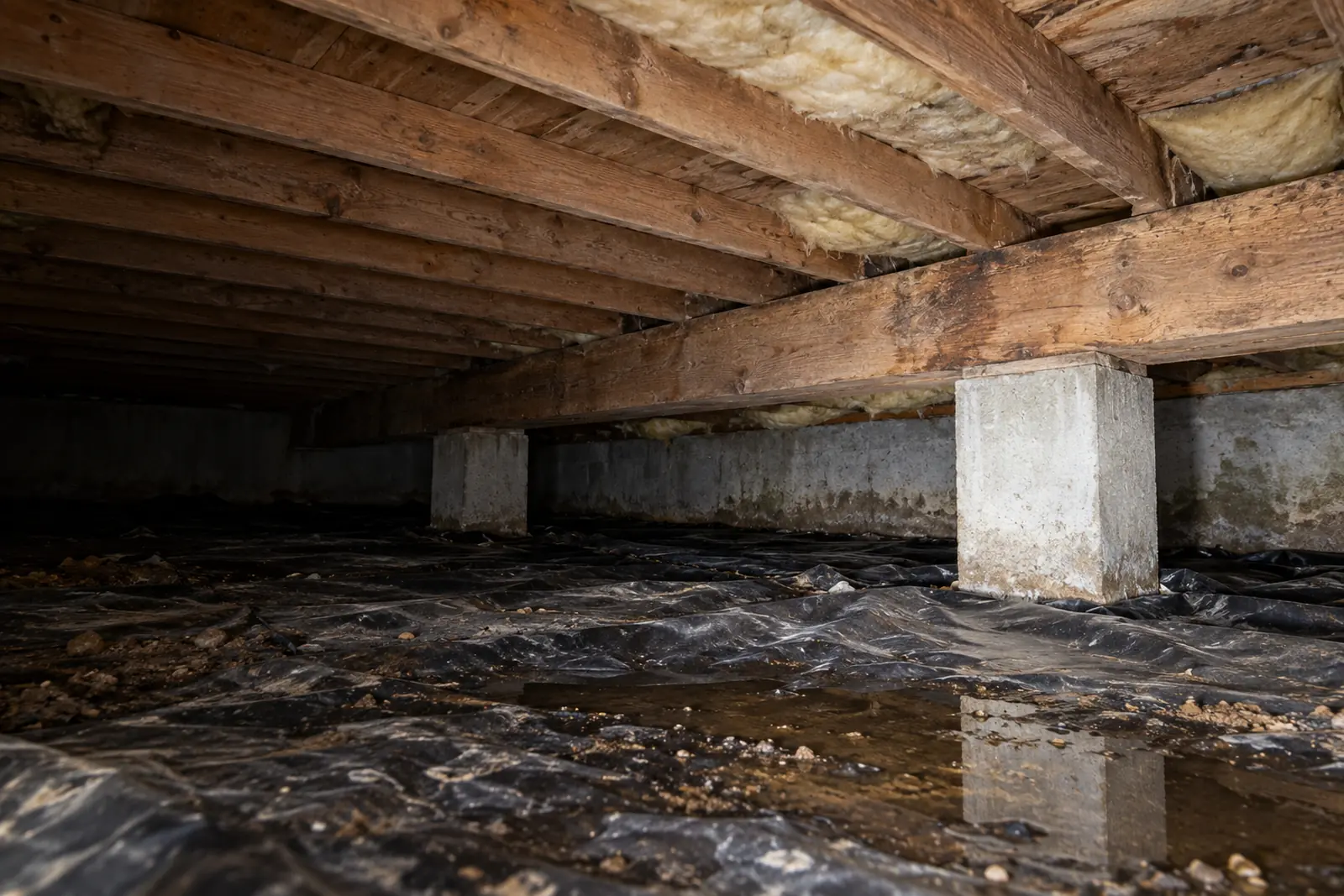
Moisture control is central to preventing mold problems. Ask what is wet, why it is wet, and whether visible damage or contamination needs separate work.
You do not need to identify the repair to ask for help.
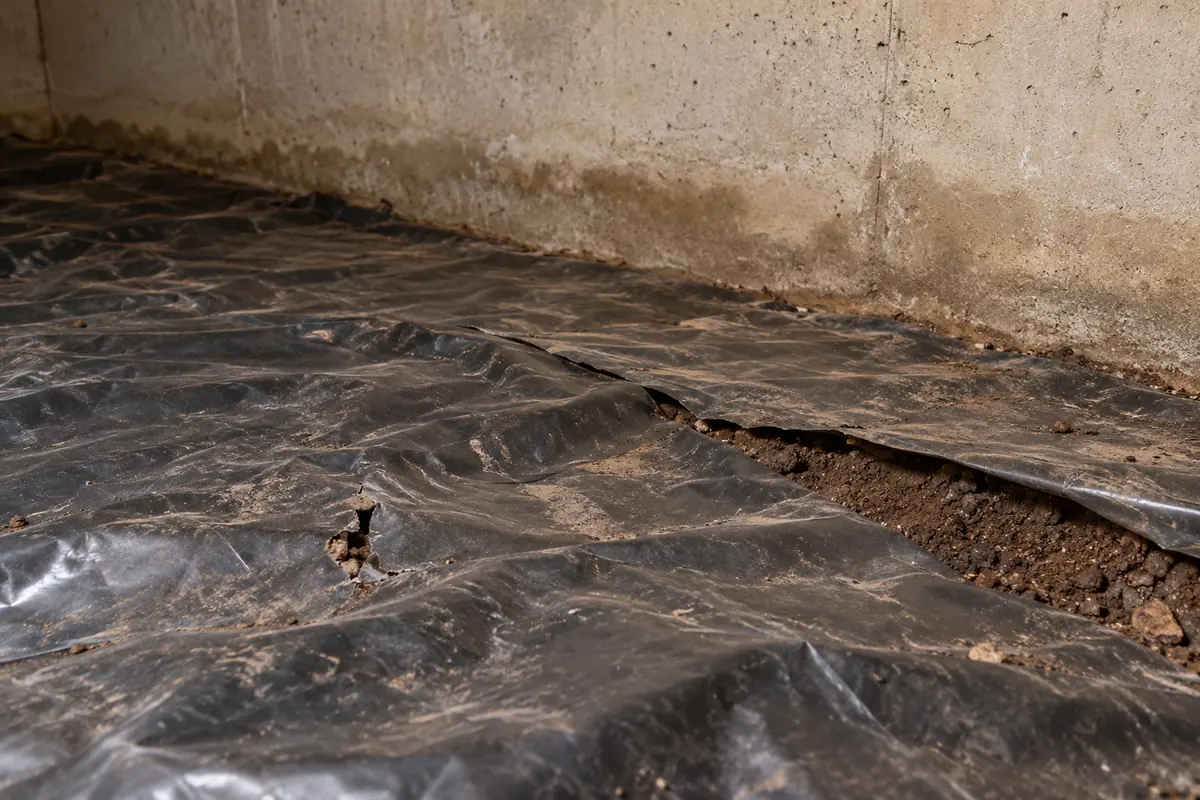
Different moisture conditions need different questions
| Observed condition | What it may warrant investigating | What it does not prove |
|---|---|---|
| Visible water or wet materials | Plumbing, runoff, drainage and other water sources | That a dehumidifier or new liner resolves the source. |
| Exposed soil or torn ground cover | Ground moisture and continuity of the cover | That full encapsulation is automatically required. |
| Persistent humidity or condensation | Moisture sources and the existing drying/ventilation strategy | That opening or closing vents alone is an appropriate fix. |
| Damaged insulation or debris | Material condition, water history and possible pest concerns | That appearance or odor identifies mold or active rodents. |
Safe observations and moisture-management questions
Note when the smell occurs, where it is noticeable and any known leaks or previous work. Use existing photos and reports to describe dampness or damaged insulation. Do not enter an unsafe space or disturb suspect growth.
Ventilation, air sealing, insulation and drying need to work with the actual crawl space design. A vented space and a sealed-space conversion can need different approaches. Ask what sources need correction before changing vents or adding equipment.
A smell isn’t a diagnosis
A persistent odor may have several sources. Crawl space moisture, wet materials, animal activity or a plumbing problem can merit investigation. A smell or photograph cannot establish a medical explanation for symptoms.
What a useful assessment should explain
- Where the moisture or odor appears to originate.
- Whether standing water, plumbing leaks or exposed soil contribute.
- Which materials show visible damage or suspected growth.
- Which findings need a remediation, pest, plumbing or structural specialist.
- How the proposed work addresses the cause as well as affected materials.
Drying, removal and prevention are different jobs
| Part of the work | Question to ask |
|---|---|
| Source correction | What keeps the moisture from returning? |
| Assessment of affected materials | Which areas require further evaluation or removal? |
| Remediation / cleaning | What methods and containment are appropriate for this situation? |
| Ongoing moisture management | What role do ground cover, drainage or humidity controls play? |
From sign to a repair path
Which repair pathway may fit?
There is no single repair for a smell. Choose a pathway that explains the observed condition, then bring the findings to an inspection.
Understand Crawl Space Inspection →
- Water & Drainage — visible water or recurring wet materials
- Vapor Barrier Installation — exposed soil or torn ground cover
- Encapsulation — evaluate a coordinated humidity-management approach
- Cleaning — assess damaged or contaminated materials
- Repair — understand overlapping findings
Crawl Space Inspection — clarify the condition before choosing work
Plan Your Next StepWhen to bring in a professional
If the space is unsafe, contamination is extensive or uncertain, materials are damaged, or the odor persists, seek a qualified assessment. Structural deterioration and leaking pipes need the appropriate trade. For health concerns, speak with a healthcare professional rather than treating the website as medical advice.
Before you buy a dehumidifier
Ask whether water intrusion, plumbing or other sources need correction first. Equipment choice depends on the actual space and moisture load. Avoid assuming equipment alone resolves standing water or affected building materials.
Sources & further reading
Educational guidance. A site visit is needed to identify the cause and appropriate repair for your home.
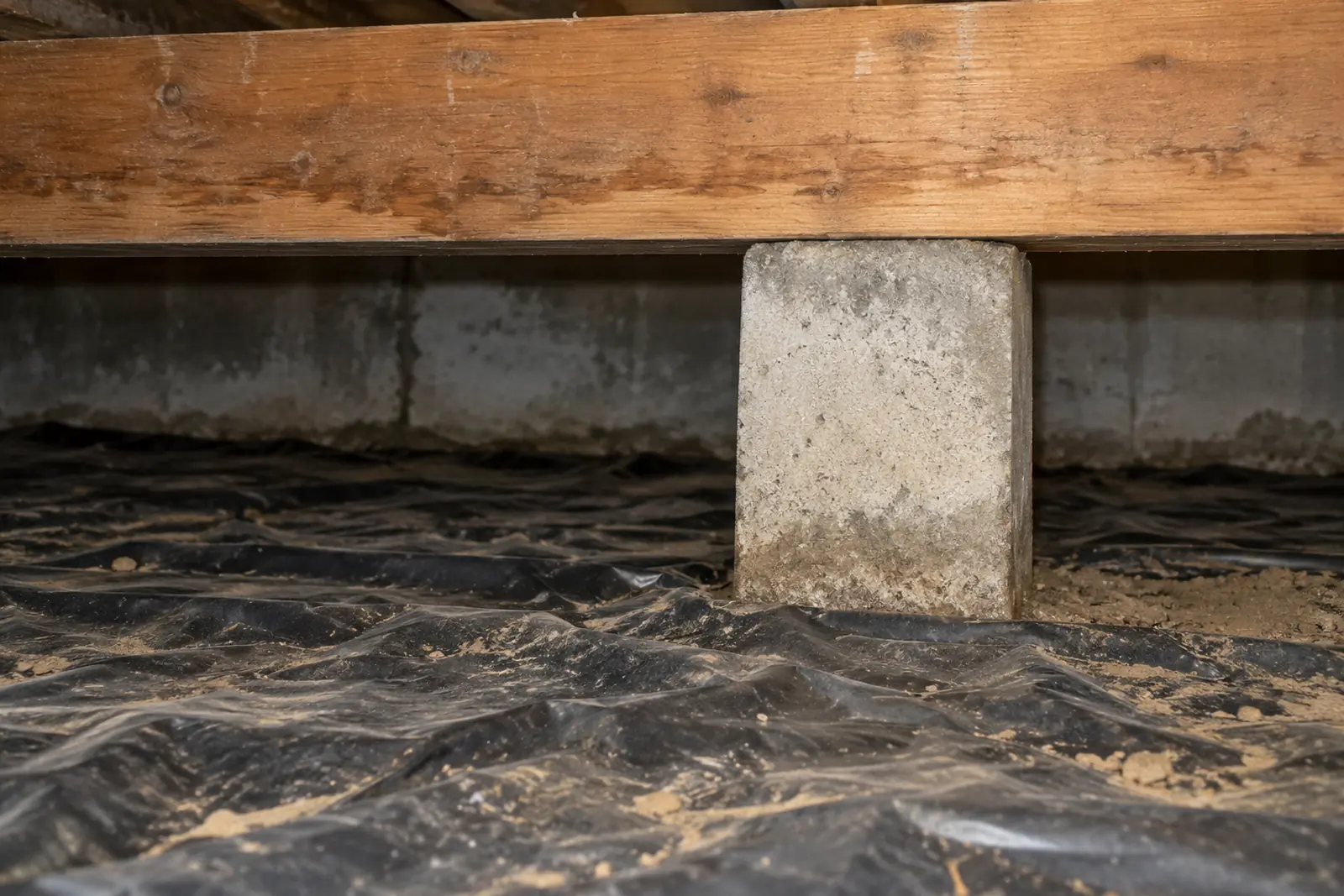
Bring the signs to an inspection.
Note what you have noticed and keep any existing report findings. A site assessment is needed to determine the cause and appropriate scope.
Plan Your Next StepInspections and repairs are performed by independent providers. CrawlRescue is not accepting online requests yet. How It Works.