Identify where the water comes from before choosing a repair. A new vapor barrier or a dehumidifier should not be treated as a substitute for investigating standing water.
You do not need to identify the repair to ask for help.
Do not enter standing water near wiring or electrical equipment. If water may contain sewage, or the space is unsafe to access, get appropriate professional help.
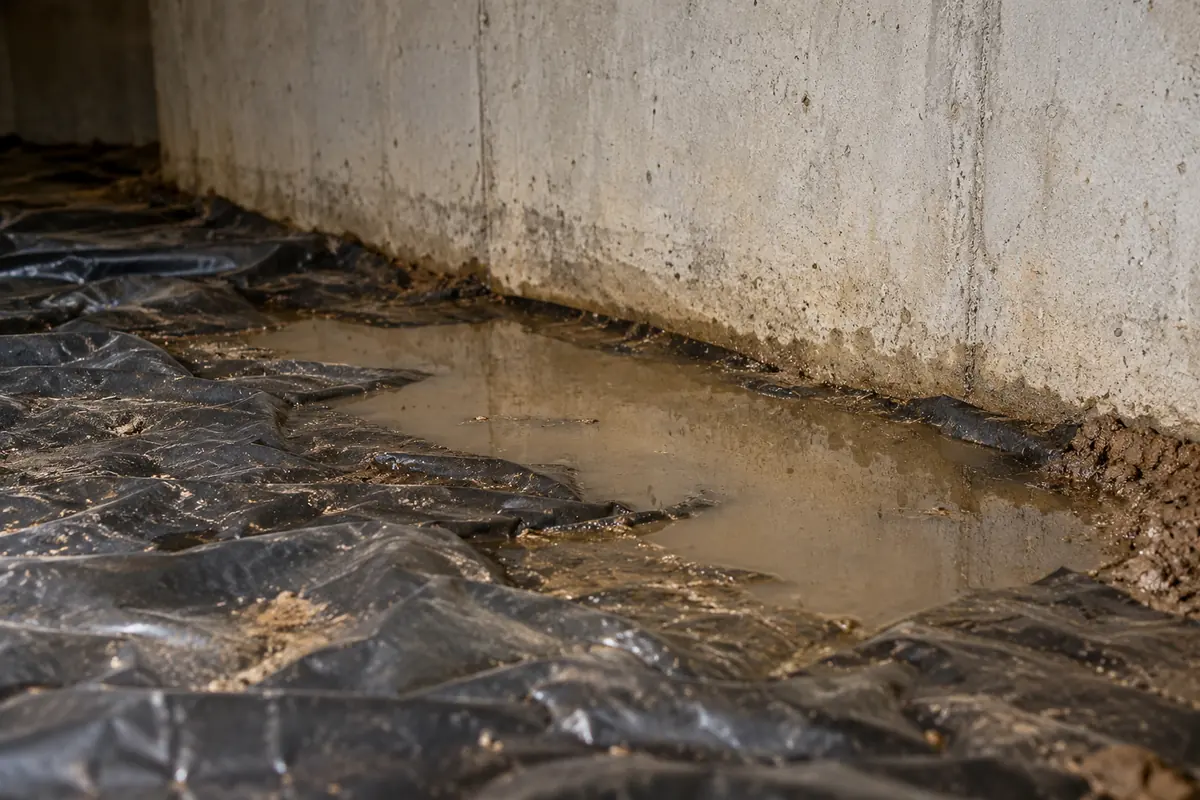
Is standing water in a crawl space serious?
Recurring or persistent water deserves investigation, especially where insulation, wood or utilities are affected. The amount visible in a photograph does not establish the full extent of damage or whether access is safe.
Water near electrical equipment, suspected sewage, active leaks or unstable floors calls for appropriate professional attention. Do not wait on general crawl space research to handle an urgent safety concern.
Can a vapor barrier fix standing water?
Ground cover limits moisture transfer from soil; it does not repair plumbing, redirect runoff or explain groundwater entry. Water may collect above or beneath existing plastic. Drainage and a sump can be relevant when a designed collection and discharge approach matches the source, rather than as automatic additions to every wet space.
What can cause water under the house?
Possible sources include roof runoff near the foundation, surface drainage, groundwater, a plumbing leak, or a problem with an existing drainage system. Rain timing is a useful clue; it is not a diagnosis.
| Pattern you’ve noticed | What to ask the inspector |
|---|---|
| Water appears during or shortly after rain | Where could runoff enter? Are downspouts, grading or drainage involved? |
| Water remains during dry weather | Could plumbing or groundwater contribute? What evidence distinguishes them? |
| Water is on top of the ground cover | Where is it entering or accumulating? Is the cover hiding additional water below? |
| An existing sump pump isn’t keeping up | Is the pump working? Are collection, discharge and drainage appropriate? |
What you can prepare without crawling underneath
- Note when water appears and whether it recedes after the rain.
- Save existing inspection photos and reports. You do not need to take new photos inside an unsafe space.
- From an accessible outdoor area, note overflowing gutters or water pooling against the home.
- Record any known pipe leak, sump pump problem, recent landscaping change or previous repair.
Different fixes address different causes
| Repair approach | What it is intended to address | What to clarify |
|---|---|---|
| Plumbing repair | Water escaping from a supply or waste line | Who stops the leak, and who assesses the remaining damage? |
| Drainage / sump system | Collecting and moving accumulating water | What source is being managed, and where will water discharge? |
| Ground vapor barrier | Limiting moisture from exposed soil | Does standing water require separate work? |
| Encapsulation / humidity control | A broader moisture-management approach | Which source repairs or drainage work must happen first? |
From sign to a repair path
Which repair pathway may fit?
Start with the source investigation. Then consider material repairs and ground-moisture control where the findings justify them.
Understand Crawl Space Water & Drainage →
- Repair — evaluate affected materials
- Vapor Barrier Installation — address exposed soil or damaged cover
- Encapsulation — consider a broader moisture-management system
Crawl Space Inspection — clarify the condition before choosing work
Plan Your Next StepBefore approving a quote
- Ask for photographs and an explanation of the suspected source.
- Ask which findings are confirmed and which are still uncertain.
- Request separate line items for source correction, drying, damaged materials and optional improvements.
- Ask how performance will be checked after the repair.
A price can depend on access, water source, drainage scope, utilities, disposal and material damage. A local inspection is more useful than an unverified online estimate.
Sources & further reading
Educational guidance. A site visit is needed to identify the cause and appropriate repair for your home.
Bring the signs to an inspection.
Note what you have noticed and keep any existing report findings. A site assessment is needed to determine the cause and appropriate scope.
Plan Your Next StepInspections and repairs are performed by independent providers. CrawlRescue is not accepting online requests yet. How It Works.