Ask why the insulation is falling, whether it is wet or contaminated, and which sections need work. Cold floors alone do not prove the crawl space needs a particular repair.
You do not need to identify the repair to ask for help.
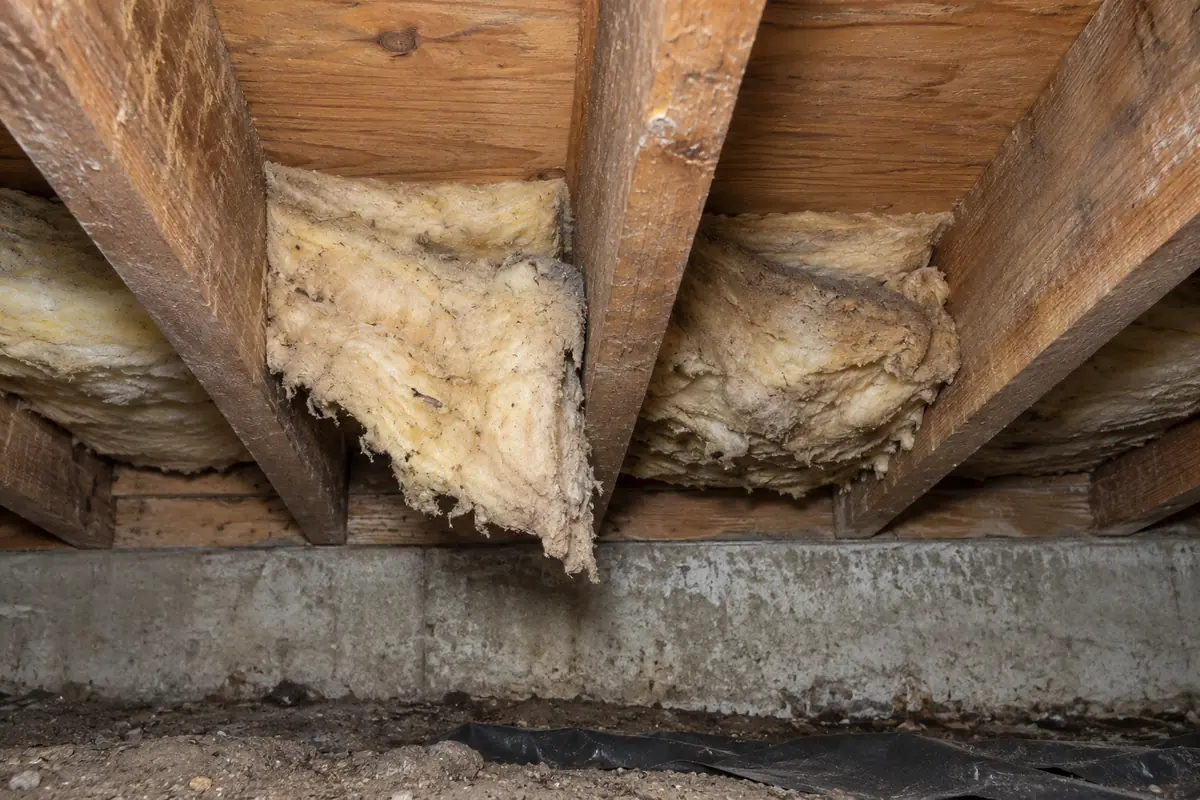
Dirty, discolored or compressed: what does it mean?
Discoloration may reflect dirt, moisture history or other exposure; appearance alone does not identify mold or active contamination. Compressed, torn or displaced material needs assessment of its condition, coverage and support.
Simply pushing damaged insulation back between joists may leave the cause unresolved. Apparently dry, otherwise suitable batts may warrant a support correction; wet or contaminated sections may need appropriate removal and replacement after source work.
What you can safely note
Use existing inspection photos to record where insulation is hanging and whether water or rodent evidence was also reported. Note cold-floor concerns and any known leak or pest work. Do not handle suspect contaminated material or enter the crawl space to verify it.
Chewed wiring, an active leak, sewage or unstable floors need the appropriate professional. A sagging batt by itself does not establish structural failure.
Why insulation can hang down
Insulation can become loose because of inadequate support, disturbance, age, animal activity or water damage. A photo may show the symptom without revealing the underlying cause.
| Finding | Useful follow-up question |
|---|---|
| Loose but apparently dry batts | Can appropriate support or local correction solve the problem? |
| Wet or stained material | Where did the moisture come from, and is the source still active? |
| Torn insulation, nesting or droppings | Does pest control and contamination handling need to precede replacement? |
| Cold floors with no confirmed insulation damage | Could air leakage, ductwork or another factor contribute? |
Don’t cover up an unresolved cause
If water or rodents are involved, the quote should explain how those problems are addressed. Replacement insulation does not stop a leak, correct drainage, or close entry points.
From sign to a repair path
Which repair pathway may fit?
Let material condition and the underlying cause guide the scope. Insulation work may need coordination with water or rodent repairs.
Understand Crawl Space Insulation →
- Rodent Damage Cleanup — affected materials and entry concerns
- Water & Drainage — investigate wet insulation
- Repair — coordinate the broader scope
Crawl Space Inspection — clarify the condition before choosing work
Plan Your Next StepAsk for a clearly explained scope
- Location and approximate extent of damaged material.
- Reasons for selective versus complete removal.
- Material and installation approach appropriate to the home's assembly.
- Any moisture, air sealing, duct or access work priced separately.
- Removal, disposal, inspection and follow-up responsibilities.
Insulation configuration depends on the crawl space design and applicable requirements. Avoid choosing a thickness or insulation location from a generic diagram alone.
Do not handle suspect contaminated insulation or enter an unsafe space to inspect it yourself. Ask a qualified professional to assess the condition.
Sources & further reading
Educational guidance. A site visit is needed to identify the cause and appropriate repair for your home.
Bring the signs to an inspection.
Note what you have noticed and keep any existing report findings. A site assessment is needed to determine the cause and appropriate scope.
Plan Your Next StepInspections and repairs are performed by independent providers. CrawlRescue is not accepting online requests yet. How It Works.