Crawl space help • South Sound, WA
Crawl Space Insulation
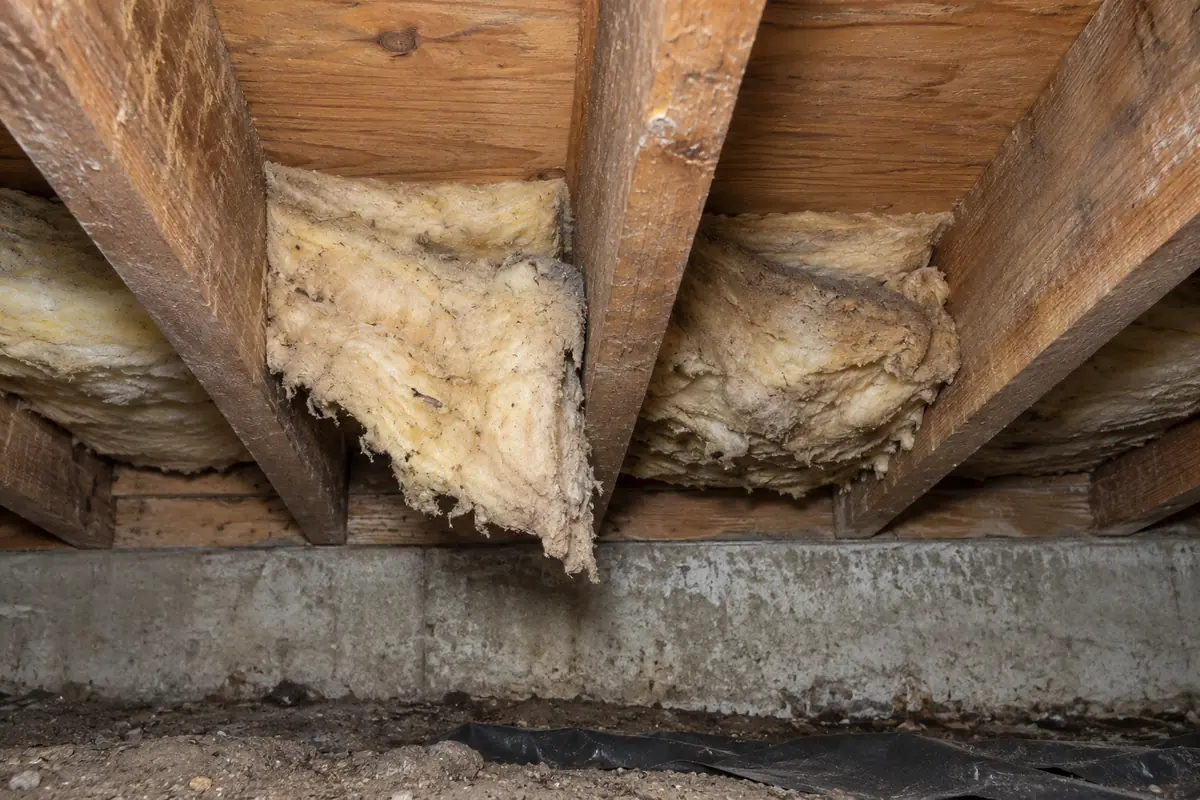
Falling or wet insulation is a sign to investigate. Find out what failed before deciding what to remove, support or replace.
Plan Your Next Step →Understand your options ↓Inspections and repairs are performed by independent local providers, not CrawlRescue.
Start with the signs
Insulation can fail in different ways.
Sagging batts, wet material, compressed sections and rodent disturbance can look similar from a distance. An assessment should consider support, moisture, contamination and the existing crawl space assembly.
- Falling or sagging batts
- Support problems, disturbance or damaged material may be involved. Apparently dry, otherwise serviceable sections may warrant a targeted correction rather than automatic complete replacement. Explore falling crawl space insulation.
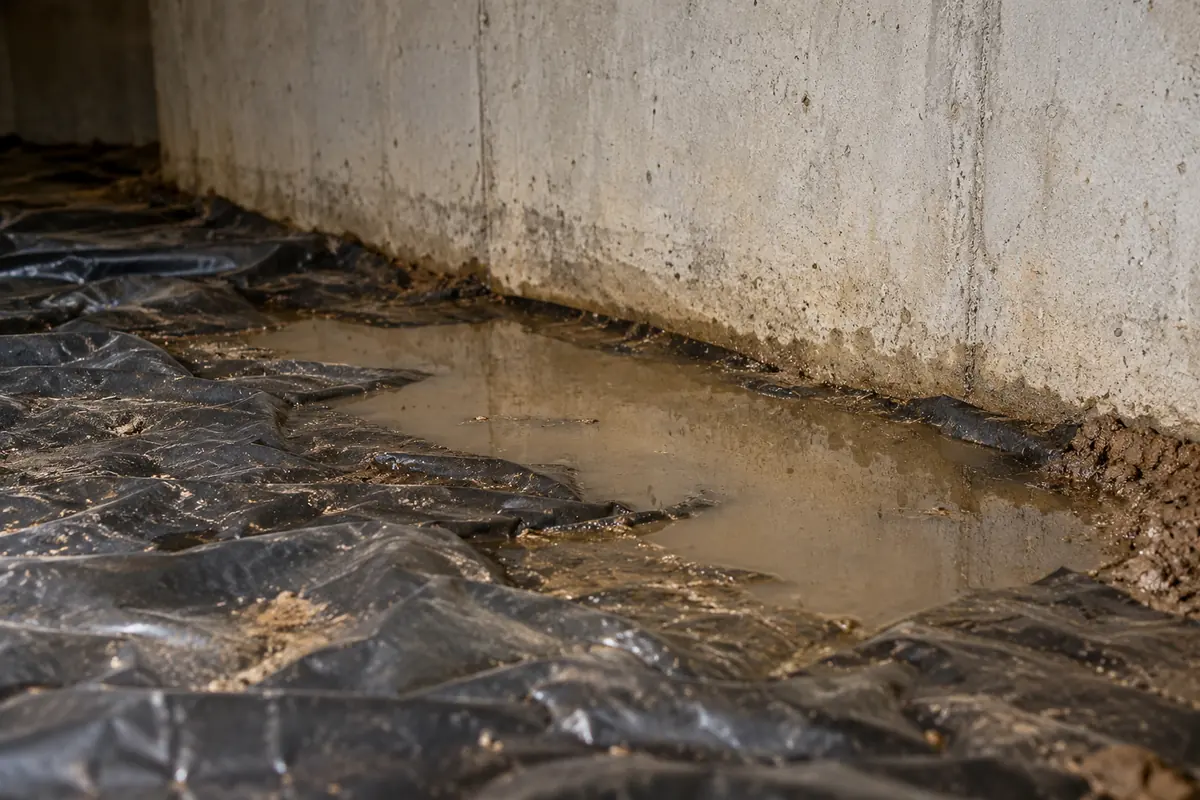
- Wet or stained insulation
- A leak, water entry or other moisture conditions may need investigation. New material does not correct the source. Understand water & drainage assessment.
- Compressed or damaged sections
- Material condition, coverage and installation need evaluation. Cold floors alone do not establish insulation damage or identify a repair.
- Rodent disturbance
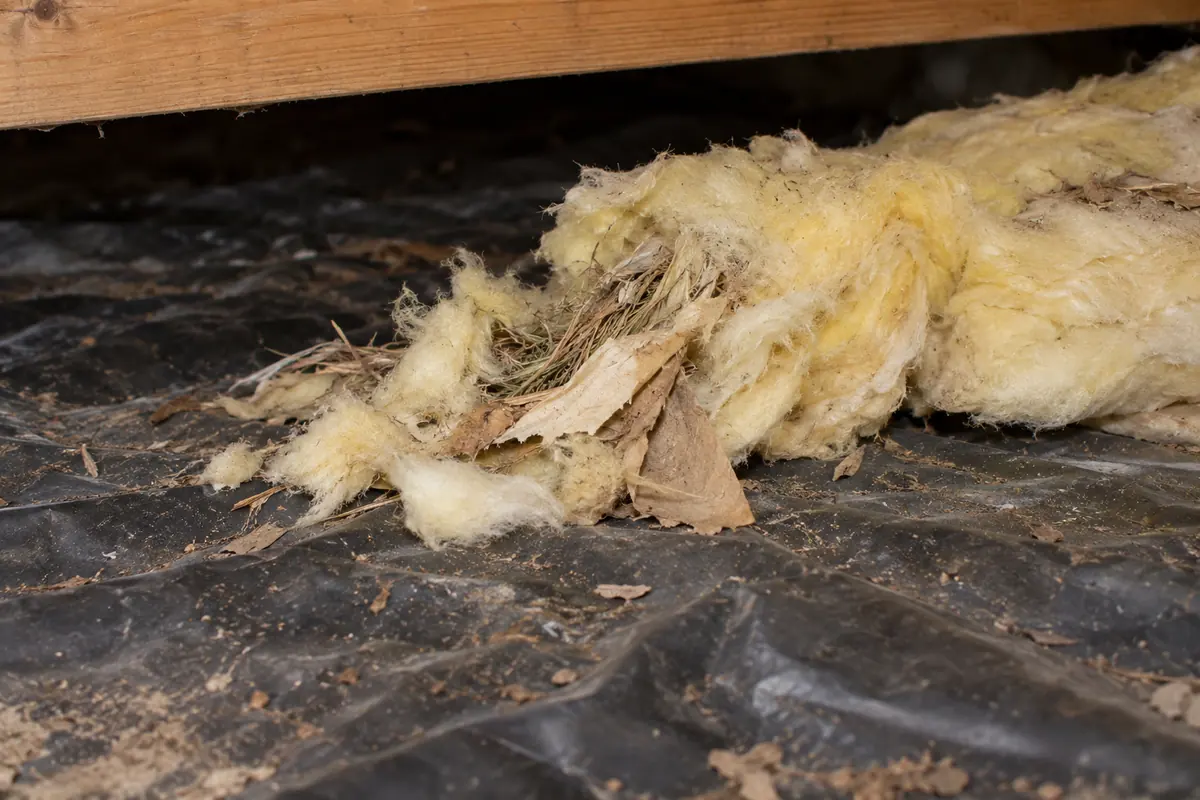
- Chewed batts, nesting or contaminated materials may call for pest/exclusion work and restoration. Explore rodent damage cleanup.
Address the cause
Replacement should follow the repair plan.
Installing new batts beneath an unresolved leak or ongoing rodent activity can expose them to the same conditions. Ask how source correction and material restoration will be coordinated.
A vented crawl space and a planned sealed-space conversion may use different insulation strategies. Wall, floor and rim-area decisions should fit the assembly and applicable requirements—not a generic material package.
Before accepting a scope
Questions worth asking.
- Why has the insulation failed, and is that cause still active?
- Which areas need removal, and which can remain?
- Will pest, moisture or utility work happen before replacement?
- Does the proposed insulation suit the current or planned crawl space design?
- What removal, disposal and follow-up are included?
Before choosing work
An inspection can put the scope in context.
Describe the signs you have noticed and share any existing photos or report. Ask which findings are confirmed, which causes remain uncertain and whether separate trades need to be involved. Scope depends on access and the provider’s assessment.
What a crawl space inspection may help clarify →
Start with the signs. Leave the repair decision for the inspection.
Plan Your Next Step →Explore the next step
Related crawl space resources
South Sound homeowners
A clearer next step for your home.
CrawlRescue is focused on homeowners in Olympia, Lacey, Tumwater and the broader South Sound. Note the signs you have noticed and keep any existing inspection findings handy.
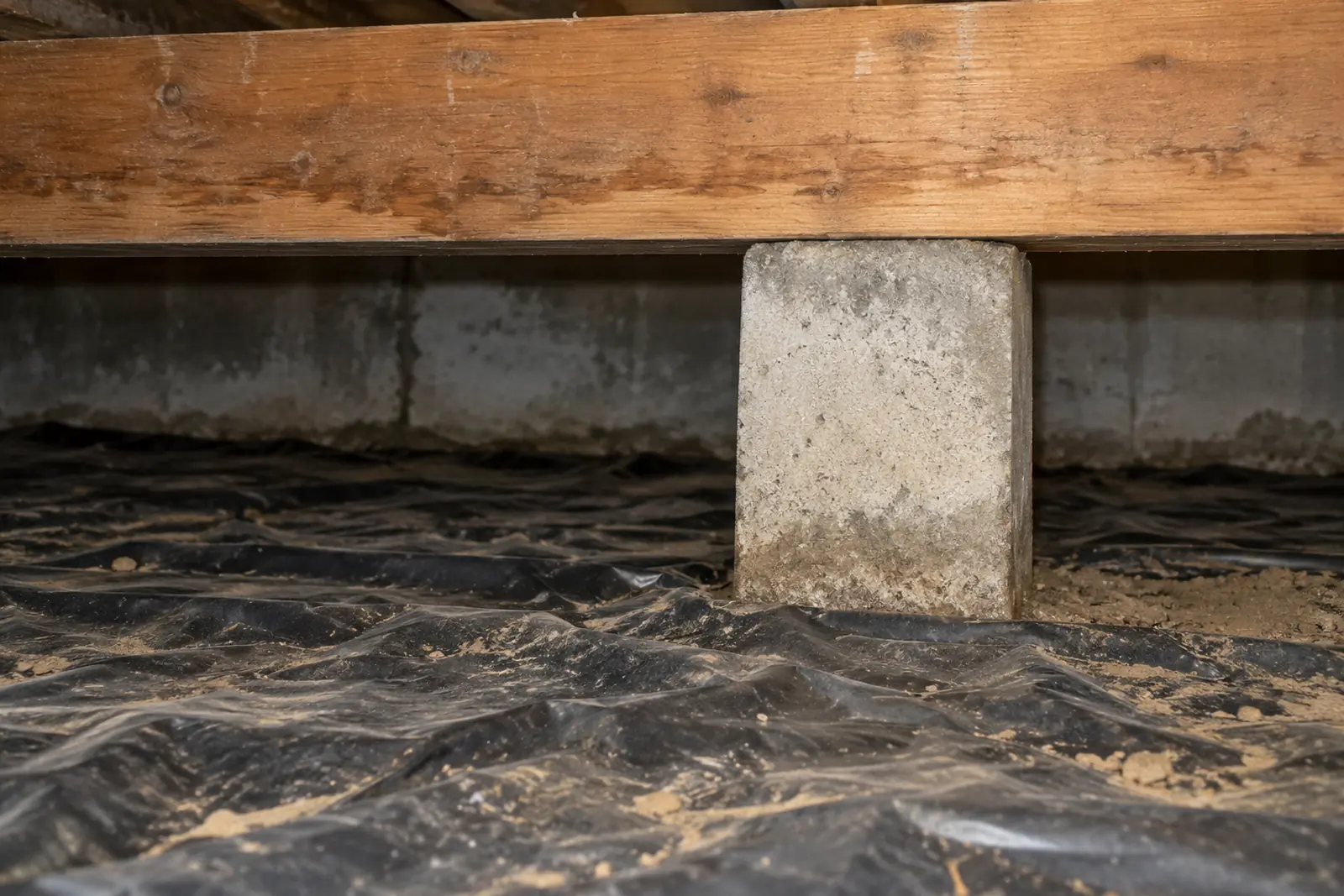
A home’s access, drainage, utilities and existing crawl space design matter more than a generic repair package. A site visit is needed to evaluate your property.
Any inspection or repair is performed by an independent local service provider, not CrawlRescue. How CrawlRescue plans to work with local providers is explained in How It Works. Online inspection requests are not open yet.
Sources & further reading
- Building America Solution Center: Unvented, insulated crawlspaces
- EPA: A brief guide to mold, moisture and your home
- CDC: How to clean up after rodents
Educational guidance. A site visit is needed to identify the cause and appropriate repair for your home.